
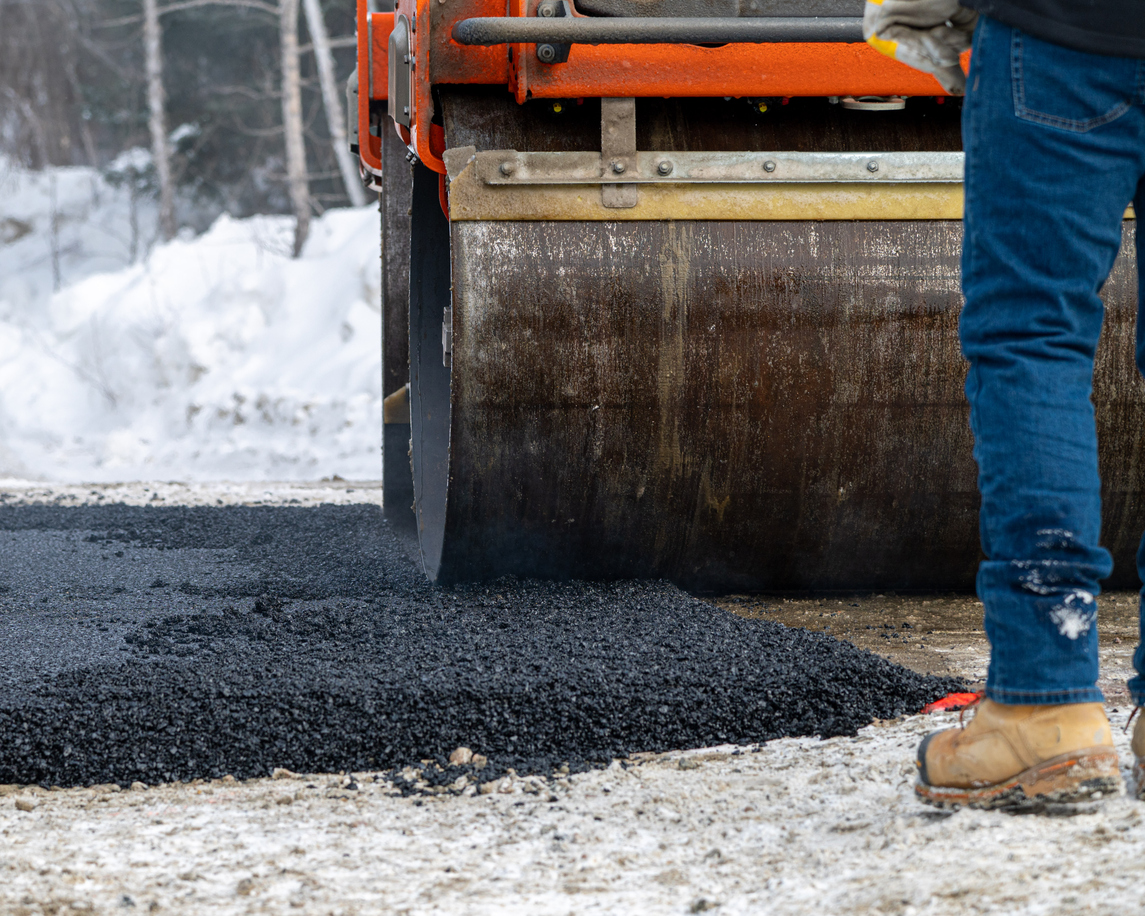
Extending the paving season has become a growing priority across the asphalt industry. Traditional hot mix asphalt (HMA) is highly sensitive to ambient temperatures, limiting when projects can be completed and often compressing work into short peak construction windows. In response, warm mix asphalt (WMA) has gained widespread adoption as a practical, performance-driven solution. By lowering production and compaction temperatures, WMA can allow contractors to work more efficiently in cooler conditions while maintaining pavement quality.
While WMA plays a central role in extending the paving season, it is typically most effective when combined with complementary materials, technologies, and planning strategies. Together, these approaches help contractors improve productivity, reduce risk, and deliver long-lasting roadways across a wider range of environmental conditions.
The Rising Use of Warm Mix Asphalt
Over the past two decades, warm mix asphalt has evolved from an emerging innovation into a widely accepted construction practice. Warm mix technologies enable asphalt mixtures to be produced and placed at temperatures lower than conventional HMA. These reductions are achieved through foaming techniques or the use of advanced warm mix additive solutions that improve binder workability and aggregate coating.
The growing popularity of warm mix additives for bitumen mixes is driven by a combination of environmental, operational, and performance benefits. Lower production temperatures reduce fuel consumption and emissions at asphalt plants, supporting sustainability goals while lowering operating costs. Reduced temperatures also create safer working environments by minimizing fumes and heat exposure for crews.
From a construction perspective, warm mix asphalt improves mixture workability and compaction, particularly during cooler weather. This enhanced performance makes WMA for asphalt especially valuable in regions with short paving seasons or unpredictable temperature swings.
Why Warm Mix Asphalt Extends the Paving Season
One of the most important advantages of warm mix asphalt is its ability to extend paving operations into shoulder seasons. By lowering temperature requirements across production, transport, placement, and compaction, WMA can allow contractors to pave successfully in conditions that would traditionally limit or halt asphalt construction.
Warm mix asphalt retains workability for longer periods, which is critical during colder weather when conventional mixes cool rapidly. This extended workability window improves compaction efficiency and helps crews achieve target densities even as ambient temperatures drop. For projects involving longer haul distances, WMA for asphalt also reduces the risk of temperature loss during transport, improving overall consistency and quality.
By enabling earlier starts and later finishes to the paving season, WMA for bitumen provides greater scheduling flexibility. Contractors can better balance workloads, reduce bottlenecks, and maintain productivity beyond the peak construction periods.
Using PHALANX® Warm Mix Additive
The performance of warm mix asphalt depends heavily on the quality of the warm mix additive used. Advanced additive technologies such as PHALANX® are designed to maintain performance while supporting the full benefits of WMA for asphalt applications.
PHALANX improves binder workability at reduced temperatures, allowing asphalt mixtures to be produced and compacted efficiently without compromising strength or durability. By improving coating, wettability, and lubricity of the coating around aggregate in a mix, PHALANX can support more consistent compaction across a broader range of paving conditions and lower temperatures.
As a warm mix additive, PHALANX enables contractors to maximize the advantages of WMA while maintaining long-term pavement performance.
Other Strategies to Extend the Paving Season
While warm mix asphalt is a powerful technology, extending the paving season also benefits from a broader, more integrated approach.
Optimized Mix Design and Materials
Carefully engineered mix designs help improve asphalt performance in cooler conditions. Selecting appropriate aggregates, optimizing gradation, and pairing binders with compatible warm mix additives can improve heat retention and compaction efficiency. Modified binders and performance-enhancing additives further support durability when paving outside traditional temperature ranges.
Improved Transport and Heat Retention
Temperature loss during mix transportation is a common challenge in cold-weather paving. Insulated truck beds, tarping systems, and optimized logistics can help maintain mix temperatures during transport. These measures complement WMA for bitumen applications by preserving workability from plant to site and enabling longer haul distances.
Advanced Compaction Technologies
Compaction is one of the most temperature-sensitive stages of asphalt construction. Modern rollers, intelligent compaction systems, and real-time monitoring tools can help crews achieve uniform density more efficiently. These technologies are effective when combined with warm mix asphalt, allowing compaction targets to be met even as conditions cool.
Strategic Planning and Scheduling
Effective project planning is essential to maximizing the paving season. Identifying projects suitable for shoulder-season paving, aligning plant operations with weather forecasts, and coordinating crews and equipment help reduce downtime. When paired with WMA for bitumen, strategic scheduling enables more consistent productivity across the year.
A More Flexible Future for Asphalt Construction
Warm mix asphalt, supported by high-performance warm mix additive solutions such as PHALANX, offers a path toward greater construction flexibility, improved safety, and reduced environmental impact.
Importantly, achieving the full potential of WMA requires more than temperature reduction alone. By combining advanced materials, optimized logistics, modern compaction technologies, and strategic planning, contractors may be able to extend paving windows, improve pavement performance, and deliver resilient infrastructure beyond traditional construction seasons.
For more information about warm mix asphalt and PHALANX, contact info@sripath.com.
