Sustainability


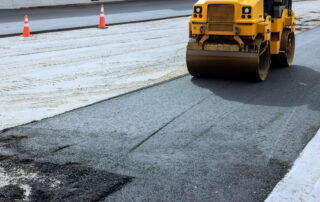
Industry efforts to achieve net zero emissions and/or lower the overall carbon footprint of the asphalt paving and roofing industries is driving more contractors and departments of transportation to seek out products that support their environmental goals. Sustainability remains at the forefront of Sripath’s innovation and product development. We design our products to help reduce carbon emissions and lower overall environmental impact. In addition to responsible sourcing and supporting sustainable production, Sripath’s products help with extending infrastructure lifecycles through enhanced durability and improved asphalt mis performance. Sripath products are also backed by Environmental Product Declarations published directly on our website.
Top Trends Shaping the Asphalt Industry in 2026

The Asphalt Industry at an Inflection Point  The asphalt industry continues to evolve as contractors, producers, and transportation agencies respond to new and evolving demands across performance, environmental, economic, and regulatory pressures. In 2026, several major forces are shaping how roads are built with early Q1 developments pointing to a year defined by innovation and adaptation.     Agencies are asking more from their pavements: longer service life, lower [...]

Breaking the 30% RAP Barrier and Achieving High-RAP Content in Asphalt Roadways

The push to increase reclaimed asphalt pavement (RAP) usage has moved from purely a sustainability talking point to a strategic priority for agencies and producers worldwide. Rising material costs, tightening environmental regulations, and growing pressure to reduce embodied carbon have made higher RAP contents increasingly attractive. And yet, despite these incentives, many departments of transportation and asphalt producers continue to cap RAP usage between 20-30%.  [...]

How Water Affects Asphalt Sustainability and Durability: From Pavement Performance to Energy Use

Water is one of the most persistent and underestimated forces acting on asphalt roadways. While traffic, climate, and materials all influence pavement performance, moisture often determines how long a surface lasts and how sustainable it truly is. Factors such as how water interacts with asphalt binder and aggregate and the hidden energy costs of removing moisture from aggregate or reclaimed asphalt pavement (RAP) piles are just the start of how water [...]

By |2026-02-26T19:52:21+00:00February 26th, 2026|Categories: Blog|Tags: , , |0 Comments

Beyond Warm Mix Asphalt: Key Strategies to Extend and Maximize the Paving Season

Extending the paving season has become a growing priority across the asphalt industry. Traditional hot mix asphalt (HMA) is highly sensitive to ambient temperatures, limiting when projects can be completed and often compressing work into short peak construction windows. In response, warm mix asphalt (WMA) has gained widespread adoption as a practical, performance-driven solution. By lowering production and compaction temperatures, WMA can allow contractors to work [...]

By |2026-02-25T21:23:41+00:00February 25th, 2026|Categories: Blog|Tags: , |0 Comments
Go to Top