
As transportation departments work toward aggressive carbon reduction targets, traditional "mill-and-fill" or complete reconstruction approaches are increasingly difficult to justify for aging roadways. Asphalt pavements degrade over time as oxidation occurs, leaving behind a brittle binder prone to fatigue cracking, raveling, and thermal stress.
To rehabilitate these deteriorating roadway surfaces cost-effectively, agencies turn to two primary in-place recycling methodologies: Cold In-Place Recycling (CIR) and Full-Depth Reclamation (FDR).
While these cold techniques can successfully re-use 100% of the existing pavement material on-site, relying solely on standard asphalt mixes or foamed asphalt leaves the underlying, heavily aged binder un-restored. Without active asphalt rejuvenation, the recycled structural layer can suffer from early moisture damage, low indirect tensile strength, or premature cracking.
Adding a bio-based asphalt rejuvenator like ReLIXER® directly into cold recycling workflows changes this dynamic. Functioning as a high-performance cold in-place recycling rejuvenator, ReLIXER restores the bitumen's functional properties without thermal heating, allowing engineers to achieve superior structural capacity and extend pavement service life.
Understanding In-Place Recycling: CIR vs FDR Asphalt Rejuvenation
While both methodologies recycle existing roadway materials while on location, understanding CIR vs FDR asphalt rejuvenation depends on identifying their distinct structural roles within pavement management.
Cold In-Place Recycling (CIR)
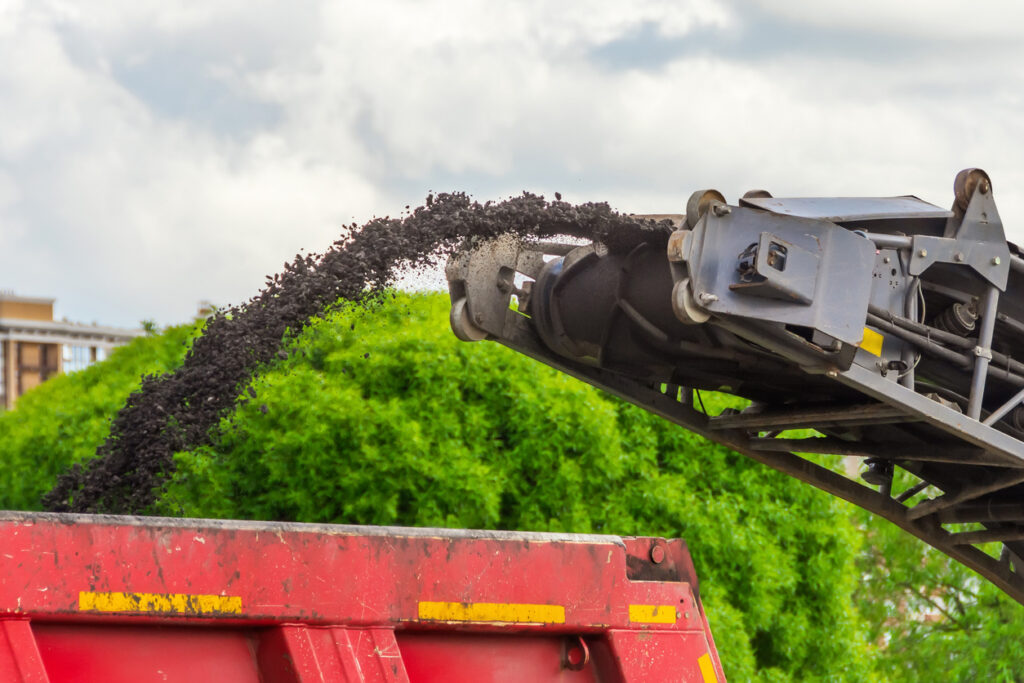
CIR treats the upper portion of the asphalt pavement, typically 2 to 4 inches (50 to 100 mm) deep. A recycling train mills the top asphalt layer, processes and sizes the recycled asphalt, blends it with liquid recycling agents and/or virgin bitumen, and immediately repaves and compacts the mix. CIR is ideal for addressing surface defects, top-down fatigue cracking, and oxidation while preserving the structural sub-base.
Full-Depth Reclamation (FDR)
FDR is a more aggressive rehabilitation strategy used when structural base failures occur. The FDR reclaimer pulverizes the entire asphalt surface course along with a pre-determined portion of the underlying granular base and subgrade (often 4 to 12 inches deep). The resulting mass requires dedicated full depth reclamation binder restoration to construct a completely new, homogenous structural base layer.
Cold Asphalt Rejuvenation: Why Emulsions Aren't Enough
A common misconception in cold recycling is that adding standard asphalt emulsions or foamed bitumen rejuvenates aged asphalt. In reality, traditional emulsions primarily act as a tacking agent or mechanical binder. They coat the aggregates in Reclaimed Asphalt Pavement (RAP) and essentially glue them together. They typically do not penetrate or alter the hardened, oxidized bitumen coating around the aggregate.
Over years of exposure to ultraviolet radiation, extreme weather conditions, and heavy traffic loads, the binder in the original asphalt mix ages and begins to fail. The stiff and brittle binder must be rejuvenated for it to be used effectively and for the long term in RAP mixes.
Adding ReLIXER, a bio-oil based asphalt rejuvenator, into the cold recycling stream satisfies benchmarks for an ideal recycling agent:
- Rapid Penetration and Softening: ReLIXER swiftly diffuses into the rigid, oxidized binder shell encasing the recycled asphalt aggregate, reducing viscosity and softening the aged bitumen.
- Long-Term Durability: ReLIXER restores similar long-term aging behavior as virgin binder, delivering superior resistance to fatigue and thermal cracking.
Engineering Benefits: Maximizing Structural Capacity and Durability
Evaluating ReLIXER alongside essential CIR mix design additives delivers measurable improvements across key engineering metrics evaluated in pavement design laboratories.
Elevated Indirect Tensile Strength (ITS) and Retained Strength Ratios
A primary vulnerability of cold recycled mixes is moisture susceptibility. In standard testing, targeted asphalt rejuvenation with ReLIXER can enhance both unconditioned and moisture-conditioned Indirect Tensile Strength (ITS). By restoring binder cohesion and stripping resistance, the mix achieves higher Tensile Strength Ratios (TSR), guarding against moisture-induced stripping and raveling under traffic loading.
Enhanced Crack Resistance & Flexibility
Cold recycled pavements stabilized with cement or fly ash can become excessively rigid, leading to shrinkage cracking that affects the surface. Adding an effective asphalt rejuvenator introduces crucial flexibility to the matrix, allowing the recycled layer to absorb flexural stresses under heavy wheel loads without micro-cracking.
Higher Effective Recycled Asphalt Utilization
Without a recycling agent, cold recycling designs often require higher dosages of costly virgin asphalt to achieve adequate workability and compaction. ReLIXER lowers the overall binder viscosity during compaction, enabling higher density at ambient temperatures while allowing engineers to optimize virgin emulsion application rates.
Integrating ReLIXER into the Recycling Train
Achieving consistent results with in-place recycling relies on accurate dosing and inline blending during field operations. ReLIXER's fluid, low-viscosity formulation simplifies jobsite logistics when used as a cold in-place recycling rejuvenator.
ReLIXER can be dosed directly into the cutting chamber of the milling machine or reclaimer. It can be metered inline into the recycling train's liquid delivery system, blending uniformly with the water or asphalt emulsion prior to application. It can also be mixed with the virgin binder prior to emulsification and dosed with the emulsion delivery system.
ReLIXER maintains low viscosity across a wide temperature range, eliminating the need for dedicated on-site heating tanks or specialized high-temperature delivery lines.
Environmental and Economic ROI: Decarbonizing Infrastructure
The combination of cold in-place recycling and bio-based asphalt rejuvenation represents one of the most sustainable pavement maintenance strategies available to modern transportation agencies.
Traditional Hot Mix Asphalt (HMA) overlay requires significant energy to heat virgin aggregates and bitumen to 300°F+ (150°C+). Cold in-place recycling can eliminate burner fuel emissions entirely during material preparation, reducing the carbon footprint by 30-50% compared to HMA.
By re-using 100% of the recycled asphalt in place, agencies eliminate the frequent trips by the heavy trucks required to haul old pavement to landfills and bring fresh virgin mix to the site. This can help reduce traffic congestion, wear on surrounding municipal roads, and diesel burn.
Cold recycling can yield a 40-60% cost savings per project compared to traditional deep milling and HMA replacement, while delivering a rejuvenated structural layer with an equivalent design service life.
Setting a New Standard for Sustainable Roadways
Cold in-place recycling and full-depth reclamation combined with solutions like ReLIXER can result in recycled layers that achieve the binder restoration, structural integrity, and long-term cracking resistance required for demanding arterial and highway applications.
For more information about asphalt rejuvenation and ReLIXER, visit www.sripath.com or contact info@sripath.com.
