
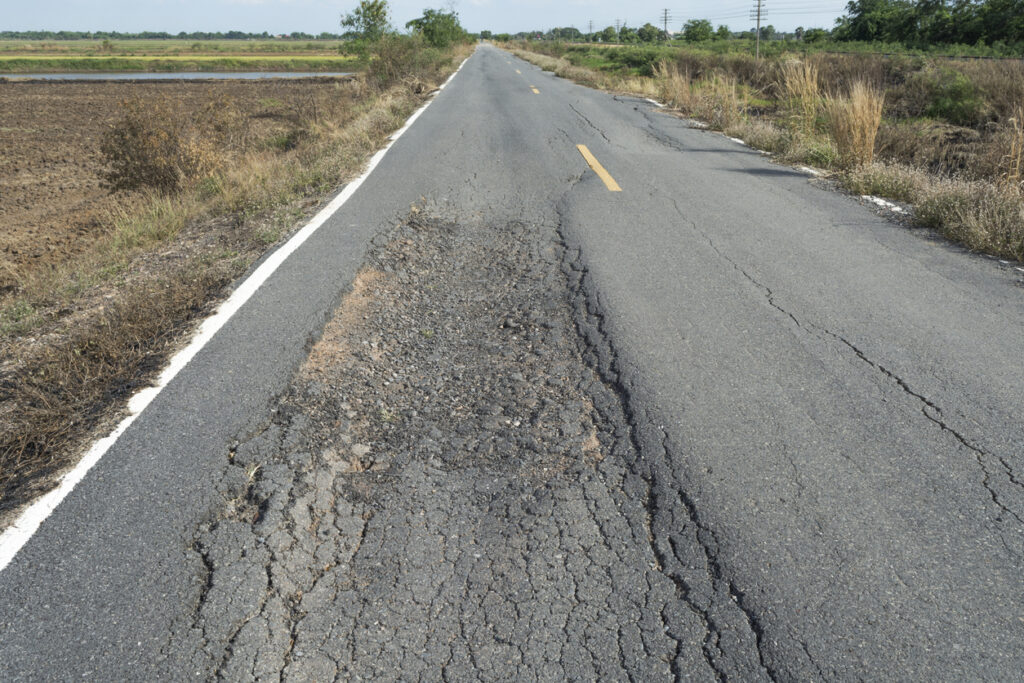
Polymer modification is an essential part of modern asphalt pavement design. As road networks are subjected to heavier traffic volumes, higher axle loads, and increasingly demanding environmental conditions, conventional binders can struggle to provide the durability required for longer service lives. To address these challenges, the asphalt industry has increasingly turned to polymer modified bitumen (PMB) systems to improve pavement performance.
Today, polymer modified asphalt is widely used on highways, intersections, and other high-stress applications where resistance to rutting and various forms of thermal deformation is critical. However, not all polymers for asphalt deliver the same balance of performance, workability, and cost efficiency.
New technologies have emerged that offer significant advantages over traditional approaches. In particular, PGXpand® is bitumen-friendly polymeric additive designed to enhance high-temperature performance, improve rutting resistance, and simplify PMB production.
The Evolution of Polymer Modified Bitumen
The use of polymers for bitumen began as a way to address the limitations of conventional asphalt binders. Traditional binders can soften under high temperatures, leading to permanent deformation and rutting under traffic loads. At low temperatures, they may become brittle and susceptible to cracking.
By incorporating polymers into asphalt binders, producers can improve high temperature performance and overall pavement durability. As a result, polymer modified bitumen has become a standard solution for demanding paving applications.
Historically, styrene-butadiene-styrene (SBS) has been the most commonly used polymer for asphalt modification. SBS-modified binders have delivered significant performance benefits, but they can also introduce challenges. High shear mixing equipment, extended production times, storage stability concerns, high carbon footprints, and increased manufacturing costs are often associated with traditional PMB production.
Additionally, producers are increasingly exploring ways to improve PMB performance while reducing operational complexity and cost. This has led to increased use of alternative polymer technologies that deliver comparable or superior results with greater efficiency.
Why Improving PMB Performance Matters
The primary goal of polymer modification is to create pavements that last longer and perform better under real-world conditions.
Improving PMB performance can help pavement owners and contractors achieve:
- Greater resistance to rutting and permanent deformation
- Improved durability under heavy traffic loads
- Enhanced fatigue resistance
- Better resistance to aging and weathering
- Reduced maintenance requirements
- Longer pavement service life
At the same time, producers must balance performance improvements against manufacturing costs, energy consumption, carbon footprint, and ease of production. The most effective polymer modifier is one that delivers superior pavement performance without creating unnecessary operational challenges.
What Makes PGXpand Different?
PGXpand represents a new approach to polymers for bitumen. Unlike conventional modifiers that can significantly increase viscosity and require intensive processing, PGXpand is specifically engineered as a bitumen-friendly polymeric additive.
The technology is designed to enhance high-temperature binder performance while maintaining excellent workability and storage stability.
PGXpand offers several distinct advantages:
- Low-shear mixing process
- Short mixing times
- High storage stability
- Low viscosity binders
- Excellent compatibility with elastomers and crumb rubber
- Reduced PMB production costs
- Lower energy consumption during manufacturing
- Lower paving and compaction temperatures
- High dosage efficiency compared to SBS
These characteristics allow producers to manufacture high-performance polymer modified asphalt more efficiently while reducing both energy usage and operating costs.
Performance Benefits of PGXpand
One of the most important characteristics of PGXpand is its ability to dramatically improve high-temperature binder performance.
By increasing binder stiffness at elevated temperatures, PGXpand helps improve rutting resistance in heavily trafficked pavements. This is particularly valuable for highways, urban intersections, bus lanes, freight corridors, and other locations where pavement deformation can become a costly maintenance issue.
Key performance benefits include:
Enhanced High-Temperature Performance
PGXpand significantly boosts high-temperature grading and softening point, helping pavements maintain structural integrity under extreme heat and traffic loading.
Outstanding Rutting Resistance
PGXpand provides improved resistance to permanent deformation and rutting to help extend pavement life and reduce maintenance interventions.
Excellent Fatigue Performance
While increasing high-temperature performance, PGXpand maintains excellent fatigue properties that contribute to long-term pavement durability.
No Impact on Low-Temperature Properties
Many modifiers can negatively affect low-temperature cracking resistance. PGXpand delivers high-temperature improvements without compromising low-temperature performance.
Lower Viscosity and Improved Workability
Unlike many traditional PMB systems, PGXpand creates low-viscosity mixes that are easier to handle, pump, mix, and compact. Improved workability can help contractors achieve density targets more consistently while reducing energy requirements during paving operations.
Superior Weathering Performance
PGXpand-modified binders demonstrate excellent resistance to aging and environmental exposure, supporting longer-lasting pavement performance.
Case Study: Transforming a PG 64-22 Binder into a High-Performance PMB
The performance potential of PGXpand can be seen through testing conducted on a conventional PG 64-22 base binder.
The unmodified binder exhibited a softening point of 48°C and a true high-temperature grade of 66.8°C. While suitable for many paving applications, these properties can become limiting in environments exposed to heavy traffic and elevated pavement temperatures.
When only 1.5% PGXpand was added, the softening point increased dramatically to 98°C, while the true high-temperature grade improved to 85.3°C. This represented a substantial increase in resistance to deformation at elevated temperatures.
Perhaps most notable was the viscosity behavior. Traditional polymer modification often produces highly viscous binders that require greater energy input and more challenging handling procedures. In contrast, the PGXpand-modified binders maintained viscosities between 370 and 402 cP at 163°C, actually lower than the 450 cP viscosity of the base binder.
The penetration values also reflected a stronger, more deformation-resistant binder structure, decreasing from 67 dmm in the base binder to approximately 39-45 dmm in the modified formulations.
These results demonstrate how PGXpand can transform a conventional paving-grade binder into a high-performance PMB while maintaining excellent processability and workability. For producers seeking to improve rutting resistance and pavement durability without sacrificing manufacturing efficiency, the data highlights the unique value of this bitumen-friendly polymeric additive .
A Smarter Approach to Polymer Modification
As pavement performance demands continue to increase, the future of polymer modified bitumen will depend achieving higher performance grades both efficiently and economically.
PGXpand offers a compelling alternative to conventional polymer modification technologies by combining exceptional high-temperature performance with lower viscosity, simplified production, and reduced energy consumption. Its compatibility with elastomers and crumb rubber further enhances formulation flexibility, allowing producers to tailor solutions to specific project requirements.
For asphalt producers looking to improve PMB performance, reduce operating costs, and deliver more durable pavements, PGXpand provides a practical and innovative path forward.
For more information about PGXpand, contact info@sripath.com.
