
As transportation infrastructure faces growing traffic volumes and heavier axle loads, pavement durability has become a priority in new road construction. Municipalities, contractors, and transportation agencies are under pressure to build roads that last longer, require less maintenance, and deliver better lifecycle value.
The importance of pavement durability extends beyond appearance or ride quality. From a financial standpoint, durable pavements can help reduce long-term maintenance costs, minimize expensive rehabilitation cycles, and lower the economic impact of traffic disruptions caused by construction and repairs. Roads that maintain structural integrity longer can also require fewer interventions, helping agencies allocate resources more efficiently over time.
From an environmental perspective, durable pavements also support more sustainable infrastructure practices. Every major roadway repair or reconstruction project requires additional raw materials, fuel consumption, trucking, and energy-intensive production processes. Frequent maintenance activity can also increase emissions associated with traffic congestion and construction operations. Extending pavement life through better asphalt performance can significantly reduce these impacts while supporting sustainability goals.
Why High-Traffic Roadways Demand Better Asphalt Performance
High-traffic roadways experience significantly greater stress than standard pavement applications. Highways, urban arterials, intersections, industrial corridors, bus lanes, and freight routes are exposed to continuous loading and repeated stress cycles that can accelerate pavement deterioration.
Heavy vehicle traffic creates concentrated pressure that can weaken pavement structures through repeated loading. Slow-moving and stop-and-go traffic conditions generate additional shear stress that contributes to rutting and surface deformation, especially during warm weather conditions when conventional asphalt binders soften more easily.
Environmental conditions further compound these issues. Heat, oxidation, moisture infiltration, and freeze-thaw cycling all contribute to cracking, raveling, stripping, and other forms of pavement distress. When these factors combine with heavy traffic loading, conventional asphalt mixtures may fail prematurely, resulting in increased maintenance requirements and shorter pavement service life.
For roadway owners and contractors, these challenges highlight the need for more advanced additives for asphalt that can improve long-term pavement performance under demanding conditions.
Why Polymer Modification Is Used in Asphalt
One of the most effective ways to improve pavement durability is through polymer modification. Polymer modified asphalt, or polymer modified bitumen (PMB), technologies are widely used to enhance the physical and rheological properties of asphalt binders to help pavements better resist rutting, cracking, fatigue, and aging.
A polymer modifier typically works by improving the flexibility and temperature stability of the asphalt binder. Conventional asphalt can become too soft at high temperatures, leading to rutting and permanent deformation, or too brittle at low temperatures, increasing the risk of cracking. Polymer modification can help balance these properties and improve pavement resilience across a range of traffic and weather conditions.
For high-traffic applications, this balance is critical. Pavements must remain stiff enough to resist deformation under heavy loading while also maintaining sufficient flexibility to absorb stress without cracking prematurely.
Polymer modified bitumen has become an essential tool for contractors focused on building longer-lasting infrastructure.
Enhancing Pavement Durability with PGXpand®
One example of advanced polymer technology helping address these challenges is PGXpand, a bitumen friendly polymeric additive developed to improve the performance and durability of polymer modified asphalt systems.
PGXpand has been used internationally across a wide range of paving applications where pavement durability, rutting resistance, fatigue performance, and long-term weathering are critical concerns. The product is also designed to improve roadway performance under demanding traffic conditions.
One of the key advantages of PGXpand is its ability to boost high-temperature performance, paving grade, and softening point without negatively impacting low-temperature properties. This is particularly important for high-traffic pavements that must resist permanent deformation while under changing environmental conditions.
By improving binder performance at higher temperatures, PGXpand helps create asphalt mixtures with outstanding rutting resistance. At the same time, the additive delivers excellent fatigue properties that help pavements better withstand repeated traffic loading over time.
Unlike some conventional PMB systems that increase viscosity and create handling challenges, PGXpand supports lower viscosity mixes that can improve workability during production and paving operations. Easier mixing, pumping, placement, and compaction can help contractors achieve more consistent pavement density and improve overall field performance.
PGXpand has also demonstrated excellent weathering performance and storage stability, helping maintain consistent binder properties during transportation, storage, and production.
Flexible Applications Across Modern Asphalt Systems
Another major advantage of PGXpand is its versatility across multiple paving and maintenance applications. The technology has been used in:
- Modified bitumen for hot mix asphalt
- Hybrid PMB applications with SBS and crumb rubber
- Hot spray seal applications
- High Stiffness Asphalt Mixes (HiSAM)
- Repair and maintenance applications
This flexibility allows producers and agencies to tailor PMB systems to specific project requirements while maintaining workability and performance consistency.
PGXpand also supports important operational and sustainability benefits. Lower viscosity mixes can help reduce energy consumption during manufacturing and paving operations while improving compaction efficiency in the field. These advantages may contribute to:
- Lower manufacturing costs
- Reduced greenhouse gas emissions
- Reduced fuel and energy usage
- Less repair frequency over the pavement lifecycle
- Improved paving efficiency and consistency
As sustainability and lifecycle performance become increasingly important within the asphalt industry, technologies that improve pavement performance and operational efficiency are becoming essential tools for infrastructure projects.
Real-World Performance: How PGXpand Improves Pavement Durability
Across multiple studies and paving applications, PGXpand has demonstrated significant benefits related to rutting resistance, fatigue life, resilient modulus, and workability.
Improving Rutting Resistance Under Heavy Traffic
Rutting is one of the most common and costly forms of pavement distress on high-traffic roadways. Heavy traffic loads and elevated pavement temperatures can cause permanent deformation within wheel paths, reducing ride quality and increasing maintenance requirements.
Testing conducted using the Hamburg Wheel Tracking Test demonstrated substantial improvements in rutting resistance with PGXpand modified binders. Increasing PGXpand dosage progressively reduced rut depth after 20,000 load cycles at 50°C, demonstrating the additive's ability to improve pavement performance under severe loading conditions.
Additional wheel tracking evaluations comparing conventional SBS-modified asphalt to PGXpand-modified systems showed particularly strong results. A binder containing only 1.5% PGXpand outperformed a formulation using 3.5% SBS polymer in rutting resistance testing, achieving lower rut depth while using a lower additive dosage.
These findings highlight PGXpand's dosage efficiency while reinforcing its value as a high-performance asphalt additive for demanding roadway applications.
Enhancing Workability and Compaction
Contractors require polymer modified asphalt systems that improve performance while maintaining efficient production and paving characteristics.
PGXpand helps improve pavement performance while supporting lower viscosity mixes that remain easier to handle during production and placement including hand-work applications. This improved workability can simplify operations while helping crews achieve target densities more consistently.
Compaction testing on dense-graded asphalt mixtures dosed with PGXpand demonstrate excellent compactability characteristics without requiring warm mix additives. Easier compaction can reduce rolling effort, improve pavement consistency, and support better long-term pavement performance.
These operational benefits are especially valuable on large-scale paving projects where efficiency, quality control, and construction timelines all impact project costs and roadway performance outcomes.
Stronger Fatigue Performance and Structural Resilience
High-traffic pavements are exposed to millions of repeated loading cycles throughout their service life, making fatigue resistance critical to long-term pavement durability.
Testing conducted by RMIT University demonstrated significant improvements in resilient modulus as PGXpand dosage increased, indicating enhanced structural stiffness and load-bearing capability within asphalt mixtures.
At the same time, fatigue testing at Rutgers University showed PGXpand-modified systems achieved fatigue life performance comparable to SBS-modified binders at efficient dosage levels. This balance between stiffness and flexibility is essential because pavements must resist deformation without becoming overly brittle.
Field Performance on Indian Highway Projects
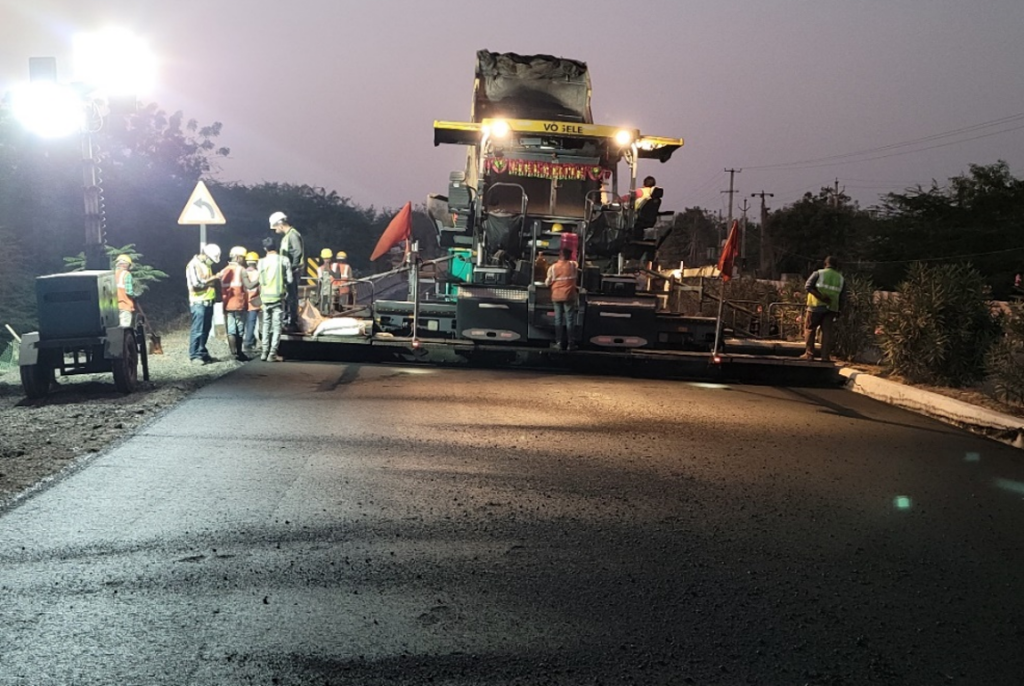
Beyond laboratory testing, PGXpand has also demonstrated strong results in field paving applications. One example involved a heavily trafficked highway project in India where 1.5 wt.% PGXpand was incorporated into VG30 grade bitumen for a 30 mm wear layer application.
The project covered a four-lane kilometer stretch of heavy traffic highway and was evaluated against a control mixture. Results showed notable improvements in softening point and high-temperature performance grade while maintaining workable penetration values.
Importantly, the paving temperature required for the PGXpand-modified mix was lower than the control mixture (160°C compared to 170°C), highlighting another important operational advantage related to lower energy consumption and reduced greenhouse gas emissions.
Building Longer-Lasting Roads for the Future
As roadway infrastructure continues to face increasing traffic demands, tighter budgets, and growing sustainability expectations, improving pavement durability will remain a central priority across the asphalt industry.
Advanced additives for asphalt, including technologies like PGXpand, are helping agencies and contractors build longer-lasting pavements capable of withstanding demanding traffic and environmental conditions. Through improved rutting resistance, fatigue performance, workability, weathering resistance, and lifecycle efficiency, polymer modified asphalt systems are supporting the next generation of durable roadway infrastructure.
For high-traffic applications where pavement performance is critical, polymer modified bitumen technologies offer a practical pathway toward lower lifecycle costs, reduced maintenance frequency, improved sustainability, and more reliable long-term roadway performance.
For more information, visit www.sripath.com or contact info@sripath.com.
