
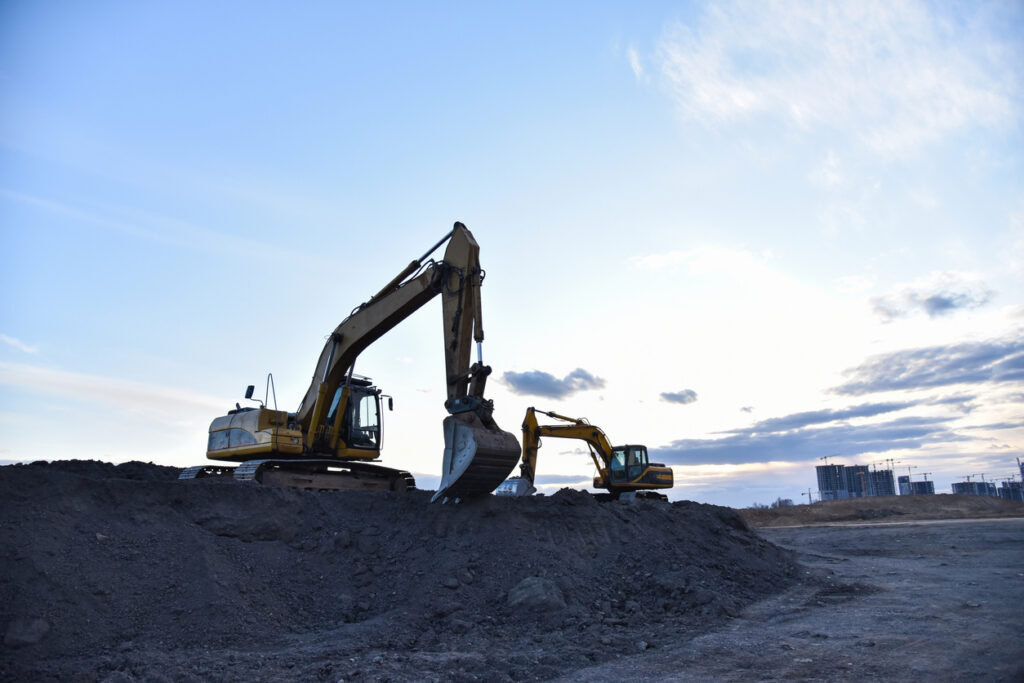
In the past, the road construction industry viewed old, torn-up highways as a necessary waste material destined for low-grade applications or forgotten stockpiles. Reclaimed Asphalt Pavement (RAP) is no longer seen as waste. Instead, it is recognized as a high-performance input.
However, transitioning from raw waste to premium infrastructure requires a crucial catalyst in different types of bitumen additives. The industry narrative has fundamentally shifted with the development of effective asphalt rejuvenation technology.
The Growing Importance of Asphalt Recycling
Heightened regulatory mandates, skyrocketing raw material costs, and an industry-wide commitment to sustainable pavement design have forced asphalt producers to reconsider how roads are built. RAP represents the world's most recycled material by volume. Incorporating high percentages of RAP into new mixtures can directly reduce the consumption of virgin (and more expensive) aggregates and bitumen.
The benefits extend beyond economic savings. By diverting millions of tons of material from landfills, asphalt recycling can lower the carbon footprint of highway construction. The challenge is no longer deciding whether to use RAP but determining how to maximize its concentration without sacrificing structural integrity.
What Happens to Bitumen During Aging
To understand why RAP requires careful handling, one must understand what happens to bitumen as it ages on the road. During its service life, bitumen used in asphalt mixes undergoes severe oxidation, volatilization, and polymerization driven by UV radiation, heat, and environmental exposure. This shifts the chemical equilibrium of the binder.
As a result, the pavement loses its viscoelastic properties, transforming from a flexible, durable material into a highly stiff, brittle binder that is extremely susceptible to fatigue, thermal cracking, and moisture-induced damage. While a stiff binder increases the rutting resistance of a road under heavy loads, it compromises its flexibility, leading to premature cracking and raveling under thermal stress and traffic loads.
Why RAP Alone Is Not Enough for High Performance
Simply adding more RAP into a new asphalt mix design without modifying the mix can lead to premature pavement failure. Because aged RAP binder is exceptionally stiff, mixing it directly with virgin binder often leads to incomplete blending. Instead of a cohesive, homogenous material, the result is a heterogeneous mix where the rigid RAP particles act as black rock, or coated aggregates that do not fully bond with the surrounding matrix.
This lack of integration creates weak interfaces within the pavement. Under cyclic traffic loading and temperature swings, these weak zones quickly develop into cracks. Consequently, pavement design specifications have historically capped RAP content at a conservative 15% to 20% to prevent rapid degradation. To break past these limits and unlock the true economic and environmental value of RAP, bitumen additives are required.
How Different Bitumen Additives Impact RAP Performance
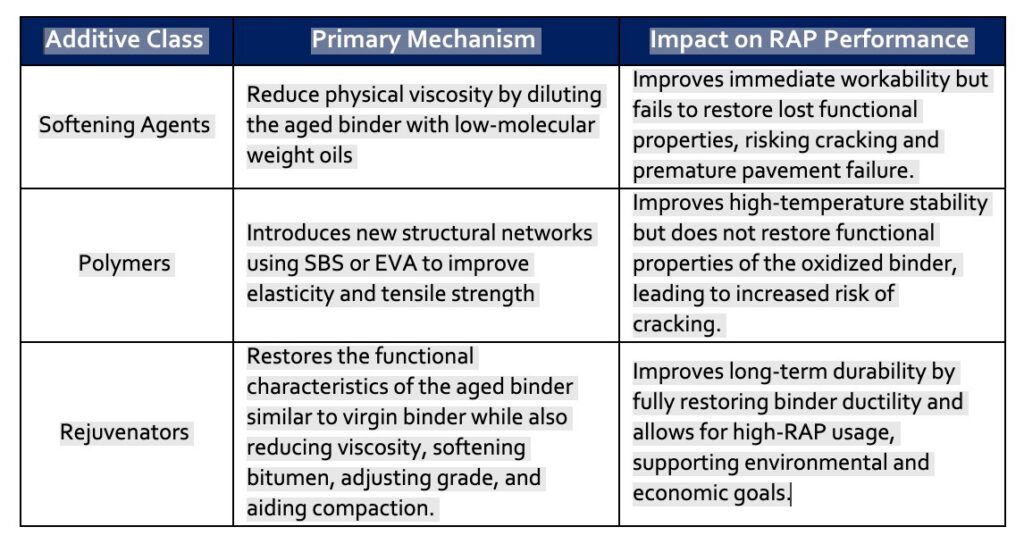
To successfully integrate high percentages of RAP (over 25% and up to 100%), engineers utilize different types of bitumen additives. These modifiers are engineered to target specific weaknesses in aged binder. However, these additives have their own strengths and weaknesses when it comes to impacting RAP performance.
Rejuvenation: The Critical Step in High-RAP Mix Design
There is a fundamental difference between simply softening a binder and truly rejuvenating it. Softening agents, such as motor oils, petrochemical oils, or vegetable oils, act as physical lubricants. They lower the overall viscosity of the mix, making it easier to work with during production and paving. However, they do not address the effects that using aged binder has on long-term performance. Over time, physical softeners can migrate out of the binder, leading to rapid re-hardening and potential rutting failures.
By contrast, asphalt rejuvenators penetrate the rigid RAP binder and restore functional balance to the mix. This supports better compaction as well as long-term durability requirements. When choosing an ideal asphalt rejuvenator, there can be no difference in roadway performance between no-RAP and high-RAP mixes, since the rejuvenated binder acts as virgin binder in the mix.
ReLIXER and the Restoration of Aged Binder in RAP
At the forefront of modern binder rejuvenation is ReLIXER®, a market-leading asphalt rejuvenator and recycling technology. Rather than relying on standard industrial chemicals, ReLIXER is engineered as a specially formulated elixir of non-hazardous, green, bio-based oils. ReLIXER is engineered to rapidly penetrate recycled material to restore a functional balance of physical properties directly to the aged bitumen.
When introduced to the asphalt mix, ReLIXER delivers high-performance results through several key mechanisms:
- Rapid Particle Penetration: It quickly diffuses into the rigid, oxidized outer shell of the RAP particles.
- Enhanced Workability and Compaction: It reduces overall mix stiffness, allowing contractors to easily lay down and compact the material to the required density in the field.
- Exceptional Aging Resistance: It provides excellent long-term aging performance, ensuring that rejuvenated pavements do not prematurely degrade or re-harden.
Utilizing ReLIXER enables asphalt producers to scale up RAP usage to previously restrictive levels while reducing the need for virgin binder and fresh aggregates. By promoting a truly circular economy, this bio-based additive lowers greenhouse gas emissions, shrinks the overall carbon footprint of paving projects, and proves that sustainable solutions are indeed the most cost-effective.
Turning RAP into a Performance Asset Instead of a Constraint
The transition from viewing Reclaimed Asphalt Pavement as a structural compromise to treating it as a premium performance asset is a critical development in roadway design. Engineers do not have to choose between sustainability and durability. By understanding the failings of aged bitumen and leveraging effective asphalt rejuvenators like ReLIXER, the asphalt industry can incorporate more environmentally friendly technologies without worrying about performance.
For more information about ReLIXER, visit www.sripath.com or contact info@sripath.com.
