
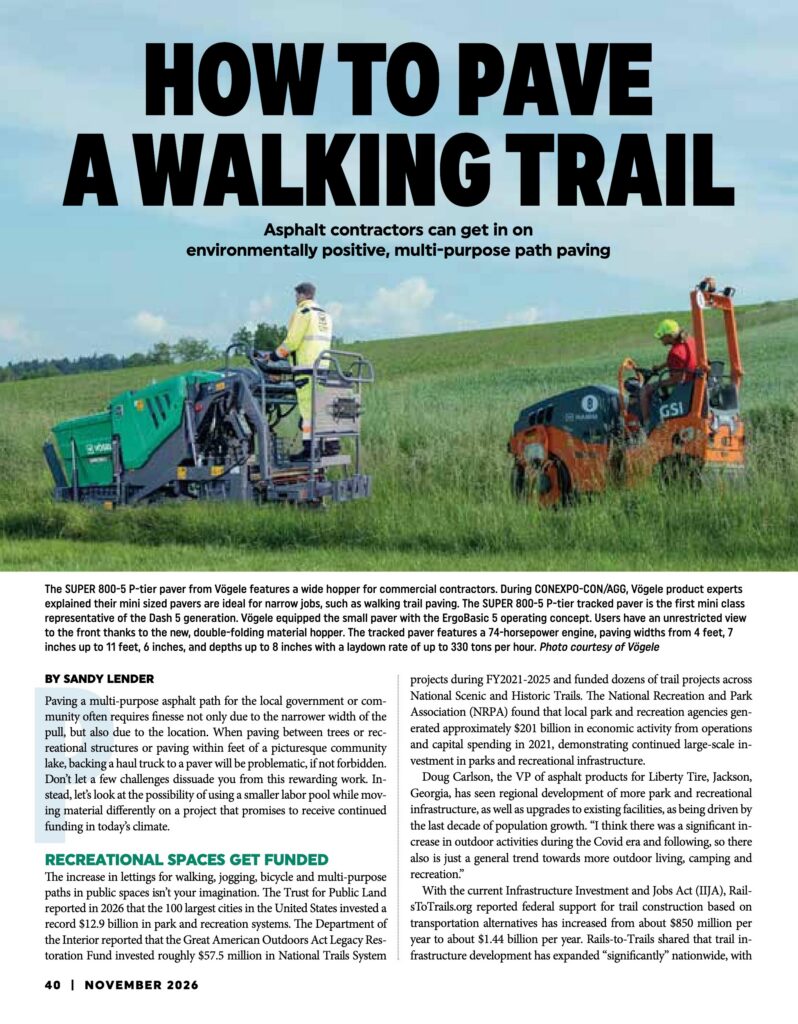
Asphalt paving contractors have new opportunities to explore sustainable materials and construction practices as communities continue investing in parks, recreational spaces, and multi-purpose trails. Incorporating reclaimed asphalt pavement (RAP) and effective asphalt rejuvenators into mix designs can help support these efforts while making better use of existing pavement materials.
These considerations were part of a recent AsphaltPro article by Editor Sandy Lender, which explored the unique challenges and opportunities involved in paving walking and multi-purpose paths. Sripath Technologies President Krishna Srinivasan contributed insights on how asphalt rejuvenation and innovative RAP applications can offer practical solutions for projects with limited site access and logistical constraints.
We appreciate Sandy and the AsphaltPro team for including Krishna Srinivasan’s perspective in this discussion.
Making RAP Work in More Applications
RAP offers an important way to improve the sustainability of asphalt production by reusing existing pavement materials. However, incorporating high percentages of reclaimed asphalt into new mixes requires careful consideration of the aged binder and its impact on performance.
An effective asphalt rejuvenator helps restore the functional characteristics of aged asphalt binder, enabling the use of RAP in new applications while reducing reliance on virgin materials.
Asphalt rejuvenation can also create opportunities beyond conventional hot-mix asphalt production. In the AsphaltPro article, Srinivasan discussed a collaborative project involving the University of South Alabama and Walton County Public Works in Florida. The research team demonstrated the feasibility of producing a cold mix using 100% RAP treated with an asphalt rejuvenator.
One particularly interesting aspect of the project was its approach to material preparation. The crew manually incorporated the rejuvenator into a RAP pile at the job site, a change from conventional plant-based processing. The project demonstrated how on-site preparation could offer practical advantages in locations where transporting conventional paving equipment and materials presents challenges.
Advancing Sustainable Asphalt Practices
The asphalt industry can continue to rethink how existing materials are used to address demand for recreational infrastructure and sustainable construction. Developing effective solutions requires collaboration between researchers, public agencies, material suppliers, and paving contractors. Projects like the Florida demonstration show the value of bringing these groups together to explore approaches to lower-carbon asphalt construction.
For a closer look at the considerations involved in paving walking and multi-purpose paths, including Krishna Srinivasan’s insights on RAP and asphalt rejuvenation, read Sandy Lender’s full article in AsphaltPro.
