
Polymer modified bitumen (PMB) is an essential material in asphalt paving, helping producers and contractors meet increasing demands for durability, rut resistance, flexibility, and long-term pavement performance. However, producing high-quality PMB requires more than blending polymers into asphalt binder. The success of the modification process often depends on the effectiveness of the crosslinking additive used during production.
Crosslinkers play a critical role in PMB manufacturing by helping create stronger interactions between the polymer and asphalt binder. Effective crosslinking improves compatibility, enhances storage stability, accelerates reaction kinetics, and ultimately helps producers manufacture a more reliable, consistent modified binder. Without effective crosslinking, PMB systems can suffer from instability, phase separation, inconsistent performance, and production inefficiencies.
Among the latest innovations in this space is ButaPhalt, an innovative crosslinking additive designed to improve PMB production while also addressing several operational challenges commonly associated with traditional sulfur-based systems.
Reducing H2S Emissions During PMB Production
One of the most important advantages of ButaPhalt is its ability to significantly mitigate hydrogen sulfide (H2S) emissions during PMB production.
H2S is a well-known concern in asphalt plant operations. Even at low concentrations, it produces a strong, unpleasant odor, while higher concentrations can create serious health and safety concerns for plant personnel. In addition to worker exposure risks, elevated H2S emissions can create operational challenges related to odor complaints, environmental compliance, and workplace monitoring requirements.
Traditional sulfur crosslinking systems can contribute to significant H2S generation during the PMB manufacturing process, particularly at elevated temperatures. ButaPhalt was specifically developed to help reduce these emissions while still delivering effective crosslinking performance.
This provides multiple benefits for asphalt producers:
- Improved worker safety and plant conditions
- Reduced odor concerns around production facilities
- Enhanced environmental and operational compliance
- Cleaner and more controlled PMB manufacturing processes
Testing showed that a PMB sample dosed with 0.1 – 0.15% ButaPhalt consistently reduced H2S emissions compared to a sulfur-only control. At 60 minutes, emissions were reduced by 58.05%, while at 180 minutes the reduction increased to 65.90%, demonstrating both immediate and sustained emission mitigation performance.
Improves Speed of Crosslinking Reaction
Production efficiency is a major consideration for PMB manufacturers, especially as demand increases and plants seek to maximize throughput. One of the key benefits of ButaPhalt is its ability to improve reaction speed during the crosslinking process.
Faster reaction kinetics can help producers reduce blending times and reach target performance properties more quickly. This allows manufacturers to optimize production schedules, reduce energy consumption associated with prolonged mixing, and improve overall plant productivity.
Improved reaction speed can also contribute to more consistent PMB quality by helping the polymer network develop efficiently throughout the binder. For facilities producing large PMB volumes, even modest reductions in reaction time can translate into meaningful operational and economic benefits.
Testing showed that ButaPhalt-dosed samples reached and surpassed the target Jnr more quickly than sulfur alone, demonstrating faster reaction kinetics and a more efficient modification process. The ButaPhalt-dosed sample also maintained a higher reaction rate throughout the evaluation period, highlighting its potential to reduce processing time and improve production throughput.
Improves Stability of Crosslinked PMB Binder
Storage stability is one of the defining characteristics of high-quality PMB. Poorly stabilized systems can experience polymer separation, or continued viscosity build during storage and transport, resulting in inconsistent binder properties and reduced field performance.
ButaPhalt helps improve the stability of PMB binders by promoting stronger, more effective crosslinking between the polymer and asphalt binder. This improved compatibility helps maintain a more uniform binder structure over time, reducing the likelihood of phase separation.
Enhanced stability provides several important advantages:
- More consistent binder performance
- Improved storage and handling characteristics
- Reduced risk of separation / viscosity build during transport or storage
For producers supplying PMB across multiple locations or storing material for extended periods, stability is especially important to maintaining product quality and customer confidence.
Highly Dosage Efficient Crosslinking Additive
Another advantage of ButaPhalt is its dosage efficiency. Crosslinking additives that perform effectively at lower dosage rates can help reduce material consumption while still achieving target PMB properties.
Dosage efficiency is important not only from a cost perspective, but also from a process control standpoint. Lower additive usage can simplify formulation adjustments, improve consistency, and reduce the introduction of excess material into the system.
For asphalt producers, achieving desired PMB performance with optimized additive dosage can contribute to both operational efficiency and overall production economics.
Additionally, more efficient crosslinking systems can help manufacturers maintain flexibility when working with varying binder sources, polymer contents, or production conditions.
Prevents Fouling of Equipment
Equipment fouling is a persistent issue in many PMB operations, particularly when handling dusty sulfur materials or poorly dispersed additives. Build-up within production systems can lead to maintenance challenges, reduced process efficiency, and costly downtime.
ButaPhalt helps minimize fouling and contributes to cleaner production operations. Its formulation was designed to improve handling and dispersion characteristics, helping reduce unwanted accumulation within plant equipment.
Cleaner processing offers several operational benefits:
- Reduced maintenance requirements
- Lower risk of equipment blockage or build-up
- Improved production consistency
- Reduced downtime and operational interruptions
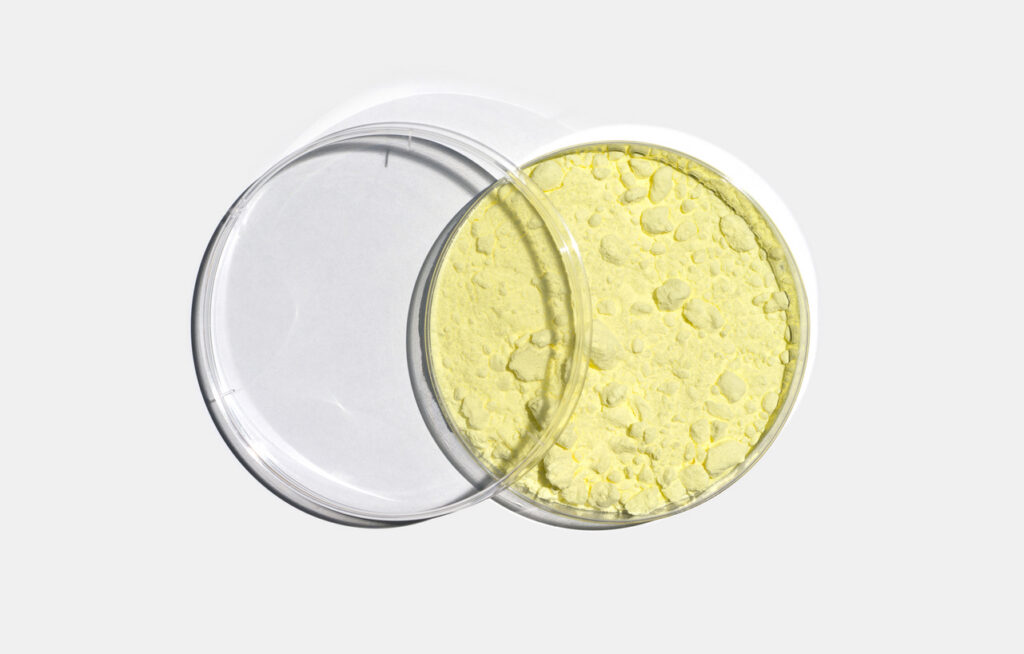
In addition to a stable pumpable liquid suspension, ButaPhalt is available as a free-flowing, dust-free powder, helping improve plant cleanliness and handling compared to conventional dusty sulfur powders.
A Modern Approach to PMB Crosslinking
As PMB performance requirements continue to evolve, producers need crosslinking technologies that support not only binder performance, but also operational efficiency, environmental responsibility, and worker safety.
ButaPhalt represents an innovative approach to PMB crosslinking by addressing several key challenges simultaneously: reducing H2S emissions, improving reaction speed, enhancing binder stability, optimizing dosage efficiency, and minimizing equipment fouling.
For producers seeking to improve PMB manufacturing performance while creating cleaner, safer, and more efficient operations, effective crosslinking technology can make a significant difference.
For more information about ButaPhalt, contact info@sripath.com.
