
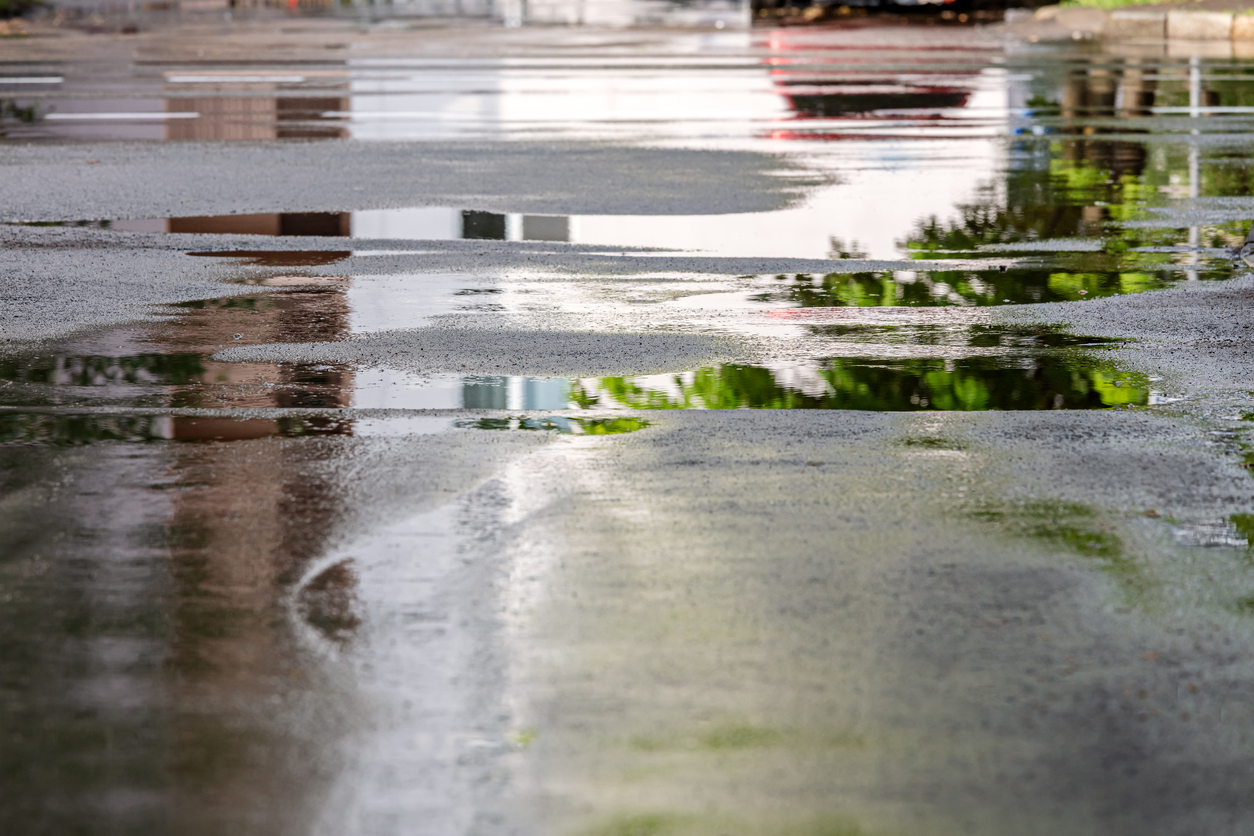
Water is one of the most persistent and underestimated forces acting on asphalt roadways. While traffic, climate, and materials all influence pavement performance, moisture often determines how long a surface lasts and how sustainable it truly is. Factors such as how water interacts with asphalt binder and aggregate and the hidden energy costs of removing moisture from aggregate or reclaimed asphalt pavement (RAP) piles are just the start of how water plays a role in pavement durability.
Controlling water throughout the entire lifecycle of asphalt is a central priority for both producers and road agencies. This article explores how water affects pavement durability, how climate-driven moisture exposure threatens long-term performance, and how new practices, including better RAP management and implementation of warm mix asphalt (WMA) technologies, can reduce environmental impact and energy consumption while addressing roadway longevity.
Water as the Leading Driver of Pavement Distress
Moisture is not just a surface-level nuisance. It has the ability to directly alter the physical pavement structure as well as its chemistry.
When water infiltrates an asphalt mix or its underlying layers, several degradation mechanisms are set in motion:
- Stripping of the binder from aggregate surfaces caused by water disrupting the adhesive bond
- Freeze-thaw expansion where trapped water freezes, expands, and fractures the pavement from within
- Hydraulic scouring where repeated traffic loads push water through voids and cause erosion
- Reduced stiffness and lower fatigue resistance when binders and mixes become moisture-saturated
- Accelerated oxidation where moisture helps introduce oxygen deeper into the binder
The result can be premature cracking, rutting, raveling, and ultimately higher maintenance demand. In many cases, water (not load) is the limiting factor of pavement life.
The Sustainability Consequences of Moisture Damage
When moisture shortens pavement life, the sustainability impact extends beyond the surface.
More moisture damage means:
- More frequent resurfacing and repairs increasing material use
- Higher cumulative emissions from manufacturing, hauling, and laydown
- Faster degradation of aggregate and binder in the mix
- Greater traffic delays and detours that can contribute to additional fuel burn
Pavements that last for 15 years instead of 7 are more than just more durable. They can have dramatically smaller carbon footprints over their lifecycles. Therefore, moisture resilience is a sustainability imperative, not just a performance target.
Climate Change: Intensifying the Moisture Challenge
Rising global temperatures are not the only climate-related concern for pavement engineers. Climate change is directly altering the moisture profile that roads are exposed to:
- More frequent heavy rainfall events
- Prolonged periods of saturation after storms
- More rapid freeze-thaw cycling in transitional climates
- Rising water tables in coastal and low-lying regions
- More extreme flooding events
These conditions create more opportunities for water to penetrate pavement layers, strip binder, weaken the base, and trigger early failures. The moisture risks of future climates cannot be solved with traditional mix design assumptions.
The Material Science of Keeping Water Out of Asphalt Pavements
Improved material selection and optimized mix designs can play a central role in resisting moisture damage on today's roadways. Key strategies include:
-
PolymerModifiedBitumen (PMB) Mixes
Formulating PMB mixes can improve adhesion and resistance to stripping, fatigue, rutting, and other deformities, helping binders stay attached to aggregates even under water pressure.
-
Anti-StripAgents
Liquid anti-strips and hydrated lime can enhance binder-aggregate bonding and significantly delay moisture-induced damage.
-
Better Aggregate Selection
Aggregates with favorable surface chemistry and low absorption help prevent moisture penetration and maintain stronger adhesion.
-
Optimized Air Void Structure
A dense, well-compacted mix with low permeability is one of the strongest defenses against moisture infiltration.
-
High-RAP Mix Adjustments
Reclaimed asphalt pavement (RAP) binder stiffening can increase susceptibility to cracking and moisture damage unless dosed with an effective asphalt rejuvenator like ReLIXER®. This is especially true of high-RAP mixes.
Construction Practices That Control Moisture Exposure for Bitumen Roadways
Even the best-designed mix can fail prematurely if moisture is introduced or trapped during construction. Best practices include:
- Ensuring proper compaction to achieve target density (every 1% increase in air voids can reduce pavement life by ~10%)
- Avoiding paving wet surfaces, which can trap moisture in the mat
- Using proper joint construction and sealing to prevent water infiltration at the weakest points
- Confirming drainage elements such as slopes, ditches, and subdrains are functioning properly
Good drainage is often the single most cost-effective durability enhancer, yet it is frequently neglected in maintenance budgets.
RAP and Aggregate Moisture Management: The Hidden Energy and Emissions Problem
While most moisture discussions focus on pavement distress, water also imposes a significant sustainability burden at the production stage specifically through moisture in aggregate stockpiles.
Outdoor RAP or other aggregate piles can absorb and retain water easily, especially in colder or humid regions. What looks dry on the surface can still be wet deeper inside the stockpile.
This moisture has a major energy impact.
Before RAP can be incorporated into new asphalt mixtures, the plant must evaporate that water using burner fuel. Even an extra 1% moisture content can significantly increase fuel consumption, forcing plants to raise temperatures or extend drying times.
The consequences include:
- Higher burner fuel use
- Increased CO₂, NOₓ, and VOC emissions
- Reduced plant throughput
- Operational limits on RAP usage during wet periods
In other words, water in RAP or aggregate material reduces efficiency and sustainability.
Reducing RAP Moisture for Higher Sustainability Gains
Producers can drastically reduce energy consumption by improving RAP moisture management through:
- Covered or partially covered storage
- Proper pile shaping and grading for runoff
- Sloped storage pads or impervious storage pads
- Frequent turning or fractionation of RAP
- Allowing time for drainage after rainfall
These simple steps lower the moisture load, reduce fuel use, and allow for more consistent RAP performance.
WMA + Dry RAP: A Decarbonization Strategy for Asphalt Production
Warm mix asphalt technologies amplify these gains. Because WMA can be produced at significantly lower temperatures when dosed with a warm mix additive like PHALANX®, RAP does not need to be superheated to achieve proper coating and blending. This directly reduces the drying burden.
With WMA and lower mixing temperatures:
- Extreme RAP preheating is not needed
- Energy use drops
- Emissions fall
- RAP incorporation becomes more flexible and consistent
The combination of WMA and RAP moisture control is emerging as a powerful decarbonization strategy for asphalt producers, helping them boost recycled content, improve plant efficiency, and reduce environmental impact at once.
Lifecycle Perspective: Why Moisture Control Matters More Than Ever
When viewed through a lifecycle lens, moisture is a critical sustainability factor:
- Water-induced distresses shorten pavement life.
- Wet RAP increases production fuel demand.
- Poor drainage accelerates failures and increases reconstruction cycles.
- Climate change is raising long-term moisture exposure risks.
Controlling moisture is not just about preventing potholes. It is also about minimizing the environmental cost of pavements across decades of service. A pavement that resists water will last longer, require fewer resources, support higher RAP usage, and lower the carbon intensity of every ton produced.
Water Is One of Asphalt's Greatest Opportunities
By designing asphalt mixes that resist moisture, constructing pavements that shed water effectively, managing RAP stockpiles to minimize moisture content, and adopting WMA technologies that reduce drying energy demand, the paving industry can significantly improve both roadway longevity and environmental outcomes.
Controlling moisture at every stage of roadway development can offer a powerful, practical pathway to building more resilient, more sustainable pavements.
For more information about reclaimed asphalt pavement, ReLIXER, warm mix asphalt, and PHALANX, contact info@sripath.com.
