

Highway engineering was traditionally evaluated through a narrow lens of standard structural performance. In the mid-2000s, success for a paving project meant satisfying target load-bearing capacities, resisting moisture damage, avoiding rutting, and staying within budget constraints. As long as the asphalt mixture hit its density specs and durability metrics, the environmental cost was largely treated as an unmeasured externality. Sustainability in asphalt paving was a niche conversation centered around early recycling efforts.
The current operational landscape has transformed dramatically. The global push toward asphalt industry decarbonization has reshaped how transportation agencies, civil contractors, and material suppliers design and procure pavements. Paving performance is no longer separated from carbon accounting. Driven by stringent environmental policies, public procurement mandates, and sophisticated analytical tools, the evaluation of sustainable asphalt pavements has shifted to a core design specification.
The Traditional Baseline for Pavement Performance
In the early 2000s, traditional Hot Mix Asphalt (HMA) was the standard. HMA requires virgin aggregate and petroleum-based asphalt binders to be mixed at elevated temperatures ranging from 300°F to 350°F (150°C to 175°C). Maintaining these intense temperatures demands vast amounts of burner fuel (typically natural gas, heavy fuel oil, or diesel) at the asphalt plant. In turn, this releases high volumes of greenhouse gas (GHG) emissions per ton produced.
Material selection focused on initial mechanical strength. High-quality virgin stone was quarried, crushed, and transported over long distances, while Reclaimed Asphalt Pavement (RAP) was often capped at conservative incorporation rates due to fears of premature cracking. Pavements were built to last, but the embodied carbon footprint embedded within every lane-mile was immense.
The Paradigm Shift: LCAs and EPD Standards
The turning point in sustainability in asphalt came with the adoption of standardized environmental measurement frameworks. The intuition-based approach to "green paving" was replaced by rigorous quantitative science including standard Life Cycle Assessments (LCAs) and Environmental Product Declarations (EPDs).
- Life Cycle Assessment (LCA): Evaluates total environmental impact from raw material extraction ("cradle") through production, construction, use, and ultimate end-of-life recycling ("grave").
- Environmental Product Declaration (EPD): A verified, transparent document detailing an asphalt mix's carbon footprint (Global Warming Potential / GWP).
- EPD Asphalt Binder Integration: Tracks the specific upstream emissions of raw bitumen and modification additives before they even reach the mixing drum.
Public agencies and private developers are increasingly requiring EPDs prior to awarding bids. An EPD asphalt binder report allows project managers to compare competing mix designs based on actual carbon intensity rather than vague environmental claims. This regulatory evolution has forced asphalt plants to optimize every stage of their thermal and mechanical operations.
Energy Reduction at the Plant: Warm Mix Asphalt and Advanced Additives
The most immediate win in modern sustainable paving has occurred directly at the production facility. Recognizing that heating aggregates and binders accounts for the vast majority of a plant's operational carbon, the industry prioritized lower production and compaction temperatures.
Unlocking these substantial warm mix carbon savings required significant chemical and mechanical innovations. This is where advanced chemical additives for asphalt and specialized additives for bitumen entered the mainstream.
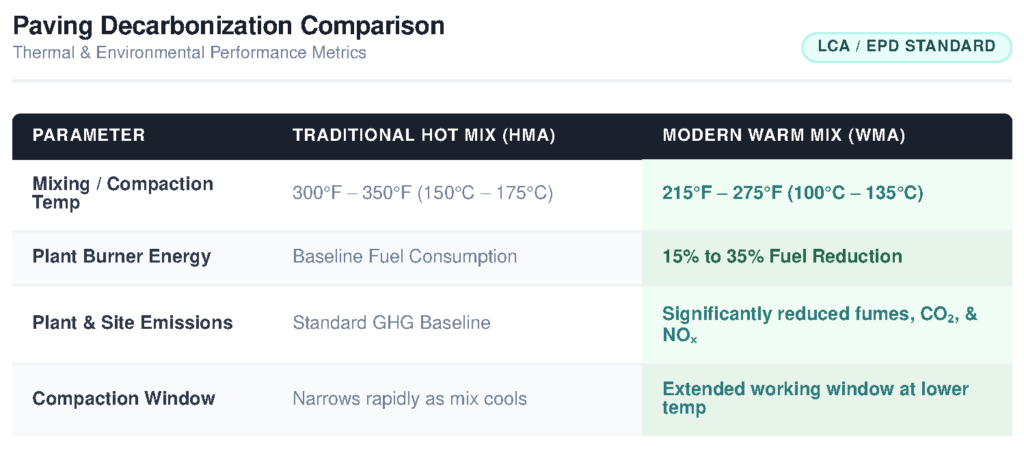
Modern engineered surface-active agents (surfactants) and more sustainable bitumen additives reduce the internal viscosity of the binder at lower temperatures. Products such as PHALANX® allow aggregate particles to be thoroughly coated and compacted at temperatures up to 50°F to 90°F lower than traditional HMA without compromising mechanical density or long-term pavement lifespan.
Virgin Aggregate Preservation and High-RAP Mixes
Beyond thermal energy reduction, the second major pillar of low carbon paving history is the reduction of virgin aggregates and bitumen. Mining raw granite, limestone, and gravel consumes significant diesel fuel, destroys local ecosystems, and consumes finite natural resources. Sustainable paving strategies reduce virgin rock dependency by maximizing recycled content. Using an asphalt rejuvenator can also help reduce the virgin bitumen needs for the mix by allowing producers to leverage the rejuvenated aged bitumen in the RAP material.
By leveraging high-performance bio-based asphalt rejuvenators like ReLIXER®, plants can now produce asphalt mixtures containing 30%, 40%, or even 50%+ Reclaimed Asphalt Pavement (RAP). These additives restore the functional properties of aged, oxidized bitumen within recycled materials, allowing old materials to behave like new. Preserving virgin aggregate and bitumen while maintaining high structural performance represents one of the most effective closed-loop circular economy successes in modern civil construction.
The Future of Paving is Low-Carbon
The transition from performance-driven road design to mandatory LCA and EPD standards represents a fundamental maturation of the asphalt industry. Paving sustainability is no longer measured by good intentions. It is calculated in kilograms of CO₂ equivalent per metric ton of mix laid down.
Through plant thermal optimization, warm mix carbon savings, innovative asphalt additives, and high-ratio material recycling, the asphalt paving sector has demonstrated environmental responsibility and heavy structural performance can coexist.
For more information about asphalt rejuvenators and warm mix additives, visit www.sripath.com or contact info@sripath.com.
