
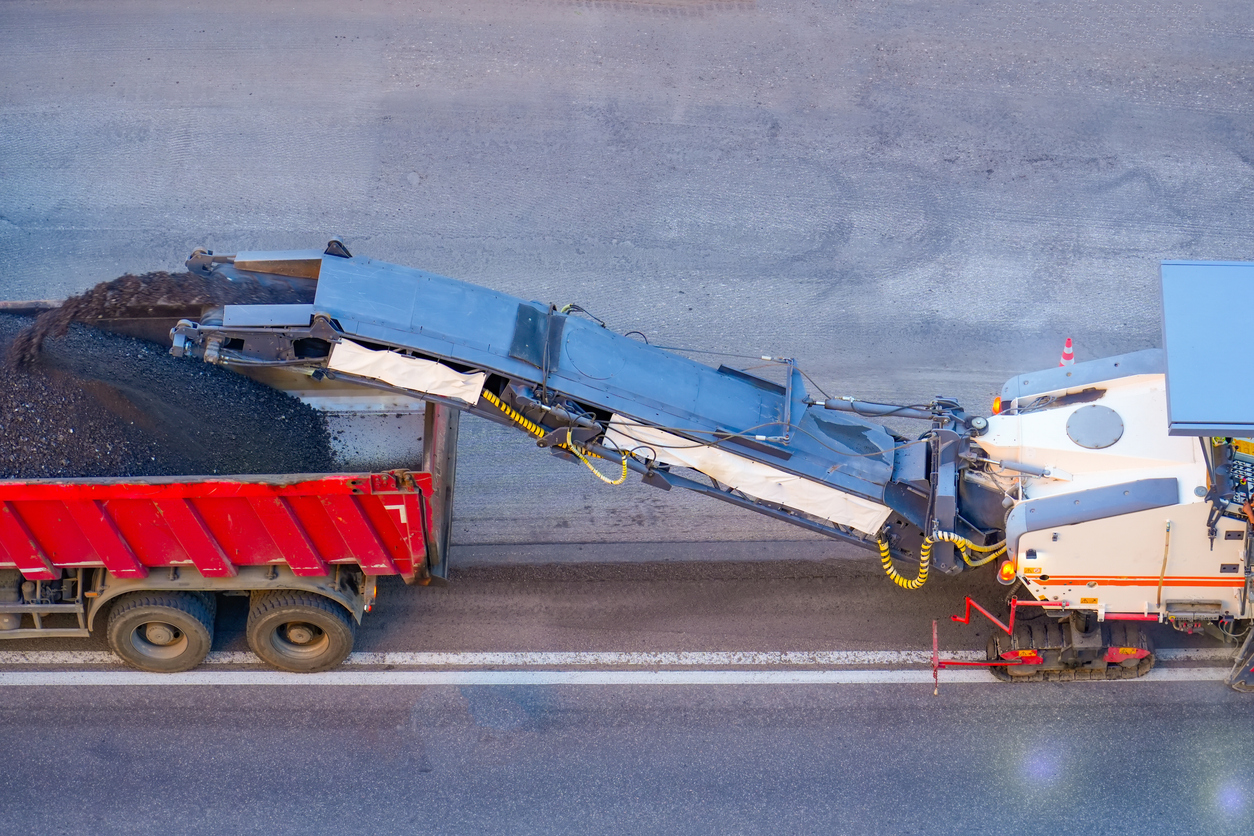
Faced with fluctuating commodity prices and increasing pressure to adopt sustainable construction practices, the asphalt paving industry is turning to solutions that deliver economic and environmental value. Among these, the use of reclaimed asphalt pavement (RAP) stands out as one of the most impactful.
With virgin aggregate and bitumen prices rising and often volatile due to global supply chain disruptions and crude oil market fluctuations, RAP offers a viable strategy to reduce production costs without sacrificing quality.
This blog explores the financial incentives and performance benefits of incorporating RAP into asphalt mixtures and highlights how technologies like asphalt rejuvenators unlock even greater economic gains.
Understanding RAP and Why It Matters
Reclaimed asphalt pavement refers to asphalt material recovered from road surfaces that have been milled or demolished during maintenance or reconstruction. The material consists of high-quality aggregates coated with aged asphalt binder, which is an asset that can be reused in new pavement mixes. Rather than sending these valuable resources to landfills, RAP can be processed and blended back into hot mix asphalt production, replacing portions of virgin aggregates and bitumen.
The growing push toward sustainability in construction has elevated RAP's importance. By reusing existing materials, producers can reduce dependence on newly quarried stone and petroleum-based binders while simultaneously reducing greenhouse gas emissions and landfill use. In the U.S. alone, over 108 million tons of RAP were recycled into new asphalt mixtures in 2023 alone, saving significant landfill space and contributing to reduced environmental impact.
However, because the binder in RAP has aged and stiffened through oxidation, it does not always perform identically to virgin binder. That's where asphalt rejuvenators (or recycling agents), which are additives designed to restore some of the original flexibility and performance of aged binders, are essential.
Benefits of Using RAP: Cost Savings and More
Direct Material Cost Savings
One of the most compelling advantages of RAP is its ability to reduce material costs. By partially replacing virgin aggregates and bitumen with recycled material, producers significantly cut expenditures associated with purchasing new raw components.
According to the National Asphalt Pavement Association, the use of RAP saves approximately $9.98 per ton on average when compared to mixtures comprised entirely of virgin materials. Annually, this amounts to roughly $4.3 billion in cost savings across the industry.
This direct reduction in material expenditure is even more valuable when considering the current volatility of raw material markets. With global supply chain constraints and oil price fluctuations influencing bitumen costs, RAP offers a practical way to stabilize production budgeting.
Lower Transportation and Logistics Costs
RAP use cuts the price of raw materials while also potentially reducing hauling and logistical expenses. When reclaimed asphalt can be sourced and processed near a project site, there are fewer miles of transport required for hauling new aggregate and asphalt binder. Approaches like hot-in-place recycling (HIR) can also resurface roadways by using existing material onsite to further reduce these costs.
Transportation savings can compound rapidly. Every mile not driven by heavy trucks equates to fuel and labor cost reductions, fewer emissions, and less wear on regional road networks.
Reduced Disposal and Landfill Costs
Traditional pavement removal can incur disposal fees and the environmental burden of landfill space usage. By recycling RAP directly into new mixes, these disposal costs disappear. Moreover, keeping asphalt out of landfills aligns with sustainability goals that many public agencies and private developers now require in project planning.
Long-Term Value: Durability and Performance Benefits of Recycled Asphalt
While upfront cost savings are vital, stakeholders must also consider long-term performance and maintenance implications, both of which are areas where RAP continues to deliver value.
Comparable Structural Performance
Concerns that recycled asphalt may compromise pavement quality have been challenged by decades of research and field performance data. Studies indicate that asphalt mixtures containing high levels of RAP can match, and in some cases exceed, the performance of conventional mixes using all virgin materials. These evaluations demonstrate equivalent resistance to rutting, cracking, and other typical failure modes when mixes are properly designed and tested.
Durability and Maintenance Savings
In addition to strength, RAP mixtures often exhibit resilience under heavy traffic and varied environmental stresses. This can translate to extended periods between maintenance cycles, reduced rehabilitation expenses, and longer overall pavement life. Over time, lower maintenance frequency contributes to significant cost savings for municipalities and commercial project owners.
RAP Sustainability as a Cost-Benefit Multiplier
In many regions, sustainability requirements are no longer optional. Public agencies and private owners increasingly specify minimum recycled content or reward its use through bid preferences, sustainability scoring, or life-cycle cost analysis frameworks. RAP helps producers meet these criteria without introducing premium materials or costly process changes.
Just as importantly, sustainability improvements often reduce risk. By relying less on virgin aggregates and binders, producers can insulate themselves from supply shortages, price spikes, and regulatory pressures tied to emissions or extraction limits. Over time, this resilience can translate into more predictable project costs, stronger competitive positioning in bids, and improved alignment with long-term infrastructure investment goals, making sustainability an environmental and financial win.
Case Study: How ReLIXER® Enables Cost Savings in High-RAP Mixes
One of the most effective ways to unlock the economic benefits of RAP is through the use of asphalt rejuvenators designed to restore balance to aged binder systems. A comparison between a conventional control mix and a high-RAP mix incorporating ReLIXER asphalt rejuvenator illustrates how rejuvenation can reduce overall mix costs while maintaining performance expectations.
In the control mix, RAP content is limited to approximately 15%, with the majority of the blend relying on virgin aggregate and virgin binder. Virgin binder alone accounts for roughly 5.5% of the total mix composition, contributing disproportionately to material costs due to its price volatility and dependence on petroleum markets. This low-RAP, non-rejuvenated approach represents the traditional baseline for many producers but comes with higher exposure to raw material pricing risk.
By contrast, the high-RAP mix incorporating ReLIXER increases RAP content to 40%, significantly displacing both virgin aggregate and virgin binder. In this formulation, virgin binder usage is reduced to approximately 3.8%, while ReLIXER is added at a very small dosage, about 0.1% of the total mix. Despite this minimal addition rate, the rejuvenator plays a critical role in restoring workability and performance balance to the aged RAP binder, allowing higher recycled content without compromising mix design requirements.
From a cost perspective, the impact is clear. When indexed against the control mix (set at 1.00), the high-RAP mix with ReLIXER achieves a cost index of approximately 0.85, representing a meaningful reduction in overall material costs. These savings are driven primarily by reduced reliance on virgin binder and aggregate, materials that are consistently among the most expensive components of asphalt production.
Importantly, the cost reduction is not achieved by sacrificing durability. Rejuvenation enables producers to design high-RAP mixes that meet performance expectations while improving economic efficiency. Over time, this approach also supports longer-term value through improved resistance to premature cracking, better aging characteristics, and reduced maintenance demands, further extending the cost benefits beyond initial production.
Why RAP Delivers Long-Term Cost Savings in Asphalt Pavement Design
In the evolving landscape of asphalt production, reclaimed asphalt pavement stands out as a cost-effective and sustainable solution to rising material costs and environmental pressures.
By reducing reliance on virgin aggregates and bitumen, lowering transportation and disposal expenses, and delivering durable pavement performance, RAP helps producers and project owners stretch budgets further while meeting quality and sustainability goals. With proper mix design strategies including a rejuvenator to optimize performance, RAP use is more than a cost-saving tactic. It is a pathway toward smarter, greener infrastructure development.
For more information about RAP, cost efficiency, and ReLIXER, contact info@sripath.com.
