
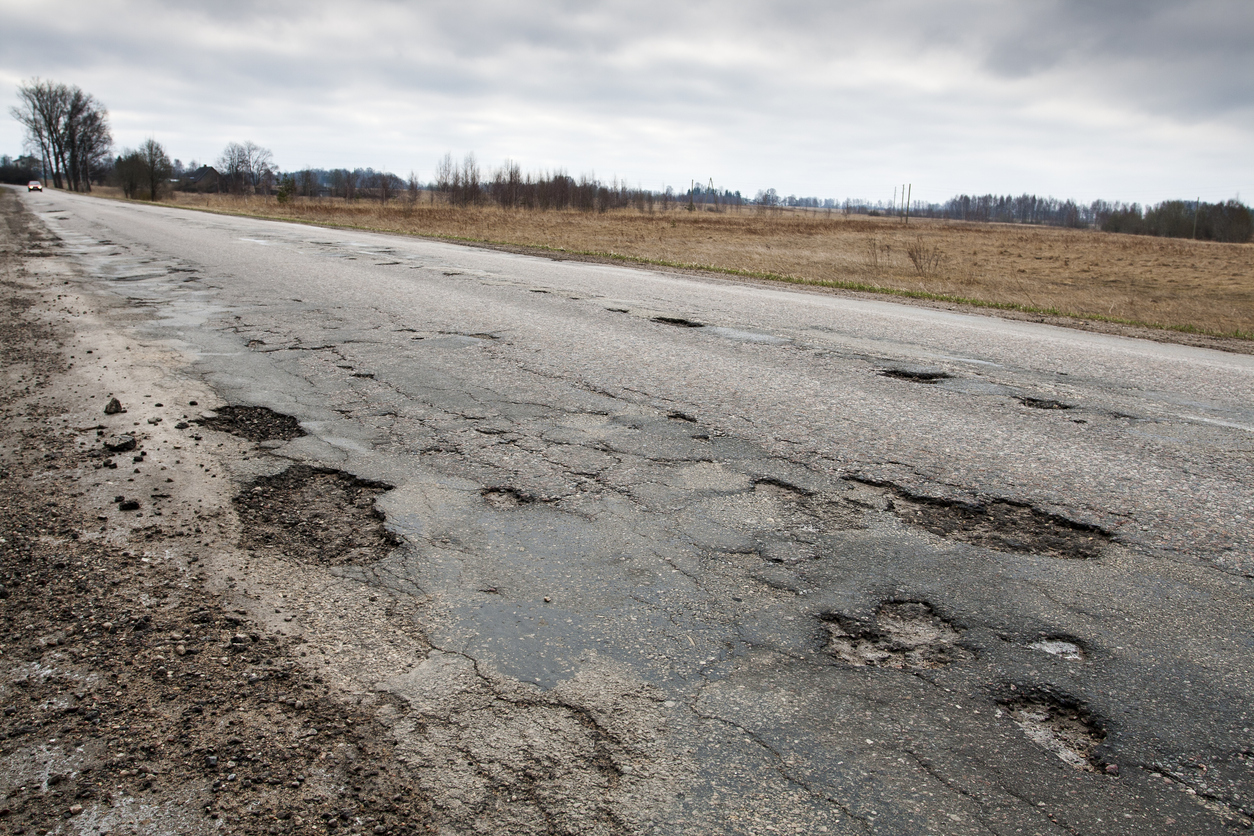
As infrastructure owners and contractors face increasingly volatile weather patterns, the demand for a climate-resilient asphalt binder has never been greater. From freeze-thaw cycles in northern regions to sustained high temperatures in the south and southwest, asphalt pavements are under constant stress. Performance is no longer defined solely by average conditions but rather a consideration of performance at extremes.
Polymer modified bitumen (PMB) has long been a strategy to enhance asphalt durability, but not all modifiers deliver balanced performance across climates. PGXpand® introduces a different approach: a bitumen-friendly polymeric additive designed to enhance high-temperature performance and rutting resistance while preserving low-temperature flexibility and improving overall durability.
The Challenge of Designing Asphalt Pavements for Extreme Climates
Extreme climates create competing performance demands. In cold environments, asphalt must remain flexible enough to resist thermal cracking. In hot regions, it must withstand heavy loads without deforming. Add moisture and oxidation into the equation, and the need for a well-balanced binder becomes even more critical.
Traditional modifiers often require trade-offs such as improving one property at the expense of another or introducing complexity in production and paving. The goal, however, is a system that performs consistently across conditions without increasing operational burden. The ability of PGXpand binder to effectively bond with various aggregates improves the performance of bitumen under all conditions.
Pavement Flexibility in Cold Conditions
Low-temperature performance is essential for preventing cracking caused by thermal contraction. Many modifiers that significantly stiffen the binder at high temperatures can negatively impact flexibility, leading to brittle behavior in cold climates.
PGXpand is specifically engineered to avoid this issue. It enhances high-temperature properties without adversely affecting low-temperature performance, allowing pavements to maintain the flexibility needed to withstand freeze-thaw cycles. This makes it a strong candidate as a cold weather asphalt polymer, particularly in regions where durability depends on resistance to cracking over repeated seasonal shifts.
Supporting data reinforces this balance. While PGXpand significantly improves high-temperature grading (for example, increasing binder performance grades from approximately PG 66 to PG 75+), it does so without shifting low-temperature performance. This indicates stiffness gains at elevated temperatures are not coming at the expense of brittleness in colder conditions.
In practice, this balance supports longer pavement life by reducing the initiation and propagation of cracks, one of the most common pathways for long-term deterioration.
Rut Resistance in High-Temperature Environments
In hotter climates, the primary concern shifts to deformation under load. Rutting occurs when asphalt softens and permanently deforms under repeated traffic, especially in high-temperature conditions and under heavy loads.
PGXpand addresses this challenge directly by boosting high-temperature performance, increasing paving grade, and elevating the softening point of the binder. Laboratory testing demonstrates clear reductions in rut depth as PGXpand dosage increases, with Hamburg Wheel Tracking results showing a consistent downward trend in deformation under repeated loading. In comparative testing, PGXpand-modified binders significantly outperform both unmodified binders and traditional SBS-modified systems at equivalent or lower dosages.
For contractors and agencies focused on hot climate asphalt performance, this translates into pavements that maintain structural integrity and surface smoothness over time. Importantly, the ability to dial in dosage allows engineers to meet specific rutting specifications without over-engineering the binder.
Equally important, PGXpand delivers these improvements while maintaining excellent fatigue properties. This combination ensures pavements can both resist deformation and absorb repeated loading without premature failure.
Moisture Resistance and Long-Term Durability of Roadways
Moisture is a silent but significant contributor to pavement failure. Water infiltration can weaken the bond between binder and aggregate, which can lead to stripping, raveling, and accelerated deterioration.
While often discussed separately from temperature extremes, moisture resistance is a critical component of climate resilience. PGXpand contributes to improved durability through enhanced weathering performance and strong compatibility with elastomers and crumb rubber. This compatibility supports more stable binder systems that are less susceptible to environmental degradation over time.
Performance testing also shows improvements in tensile strength ratio (TSR) and resilient modulus, indicating stronger aggregate-binder adhesion and improved structural response under load. Together, these properties contribute to longer-lasting pavements with reduced maintenance needs.
Effective, Efficient Polymeric Blends Designed Without Compromise
Performance gains are only part of the equation. For widespread adoption, solutions must also be practical and cost-effective.
PGXpand is designed with operational efficiency in mind:
- Low shear mixing and short mixing times simplify production
- Lower mixing and paving temperatures reduce energy consumption
- No need for additional crosslinking or warm mix additives
- High storage stability minimizes handling challenges
Critically, viscosity data shows PGXpand-modified binders can achieve higher performance grades while maintaining lower viscosity compared to conventional systems. This translates directly into improved workability, easier pumping and handling, and more efficient compaction in the field.
Compaction curves further demonstrate that PGXpand mixes achieve target density with fewer gyrations, even without warm mix additives. This not only improves construction efficiency but also helps ensure consistent pavement quality.
Compared to traditional SBS systems, PGXpand is also highly dosage-efficient, helping reduce both material costs and energy consumption. These efficiencies contribute to lower overall lifecycle costs and reduced CO₂ and greenhouse gas emissions, an increasingly important consideration for both departments of transportation and producers.
A Versatile Additive for PMB Applications
PGXpand's performance profile makes it suitable for a wide range of paving applications. These include hot mix asphalt, hybrid PMB systems with SBS or crumb rubber, spray seal applications, and high-stiffness asphalt mixes.
Field data supports this versatility. In highway applications, PGXpand-modified mixes have demonstrated improved rutting resistance at lower paving temperatures while maintaining workability and compaction performance. This combination of durability and constructability is particularly valuable in large-scale infrastructure projects where consistency and efficiency are critical.
Building Resilient Roadways for the Future
As climate variability continues to challenge traditional pavement design assumptions, the industry must adopt materials that deliver consistent performance across a broader range of conditions.
By enhancing high-temperature properties, preserving low-temperature flexibility, improving rutting and fatigue resistance, and enabling more efficient production and placement, PGXpand supports the development of asphalt pavements that are better equipped to handle the realities of extreme climates.
For contractors and agencies seeking a more climate-resilient asphalt binder, the path forward lies in solutions that balance performance, efficiency, and practicality without compromise.
For more information about PGXpand, contact info@sripath.com.
